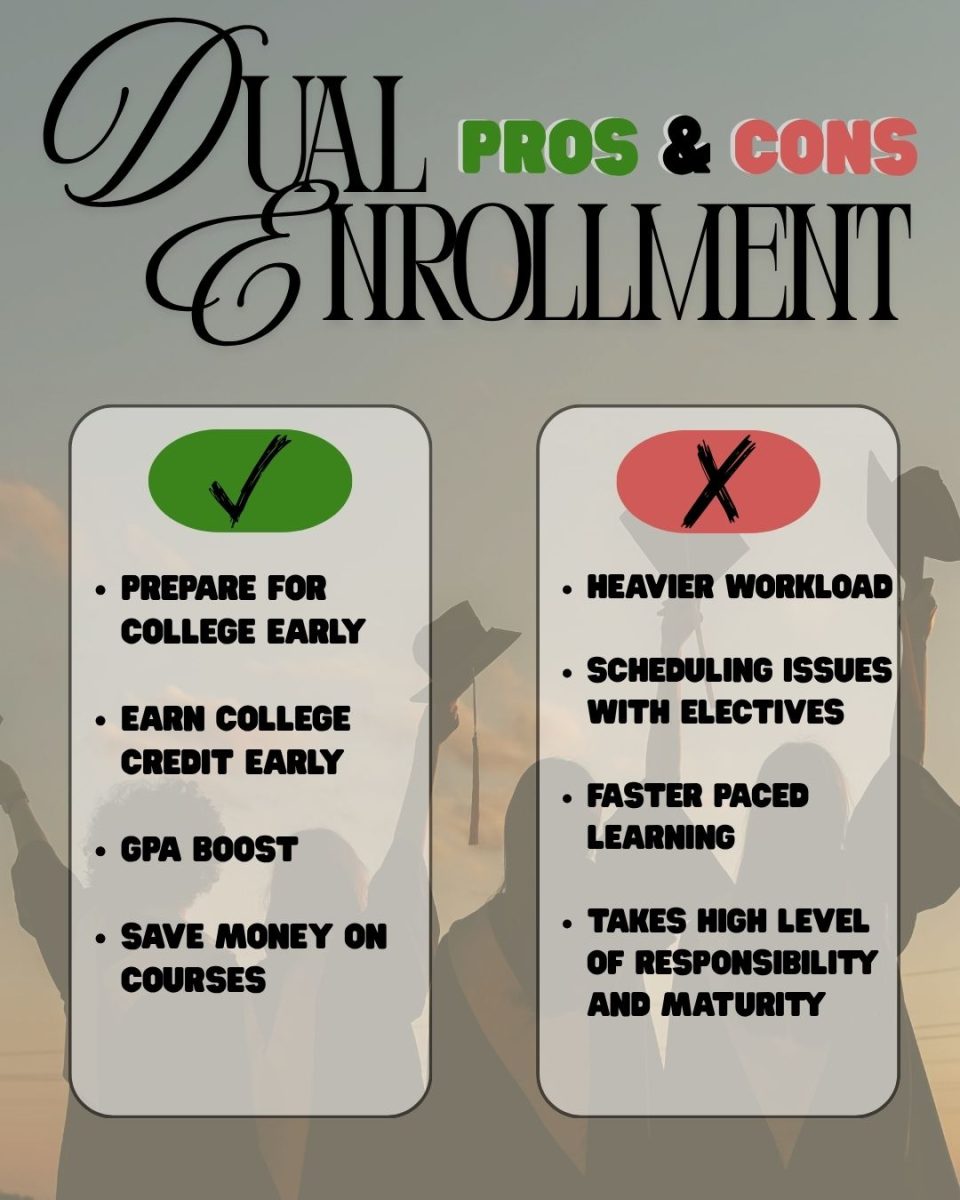

As the college credits stack up, so did the homework. With more opportunities for earning college credit opening up, students began looking towards dual enrollment rather than average classes taken on campus. They had become an increasingly popular option for students looking to earn college credit before graduation. The courses served as a chance to save time and money.
With 154 students taking an on campus dual enrollment class, students are taking advantage of the chance to earn four units of college credit by the end of high school. However, the increased workload, stricter deadlines and college style expectations also challenged students in ways that differed from traditional high school courses.
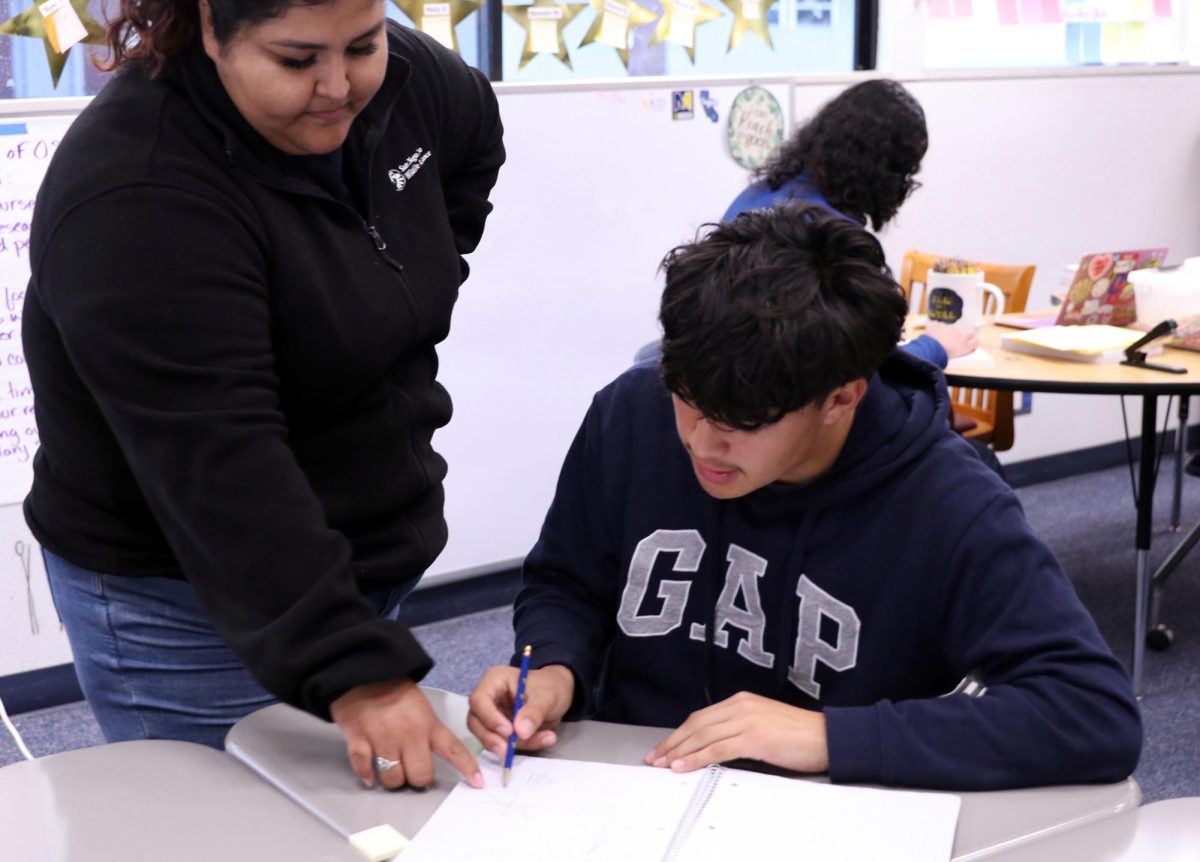
“It is to give high school students a first glimpse into what a college course could look like in their future and give them the challenge to see if college is something they could succeed in while they’re still in high school,” Social science teacher Patrick Inouye said.
Unlike Advanced Placement classes, dual enrollment courses allowed students to earn college credit simply by passing the course rather than relying on a single AP exam score. This reduced pressure gave students a more direct path toward earning transferable college credits. Kimberly Garcia, 12, had taken classes through Palomar College, believed the experience closely reflected an actual college environment.
“It’s sort of like getting the college experience because it depends on whatever classes you choose. I’ve taken classes at the San Marcos campus so I’ve been with like 60 year olds, 20 year olds all different types of age ranges, one thing I liked most was that I didn’t have to worry about AP exams, because I was automatically getting the college credits while still taking a regular class” Kimberly Garcia, 12, said.
When choosing classes to take students need to consider all of their goals for the upcoming school year. In the past confusion regarding careers and beneficial classes was common. Consulting with counselors and having conversations about what the future might look like for them facilitated the process for students.
“Not so much a conflict but when a student doesn’t know what their post-secondary goal is or what possible careers they might be interested in, it becomes difficult for them to select college courses,” Middle college counselor Rita Guerra said.